

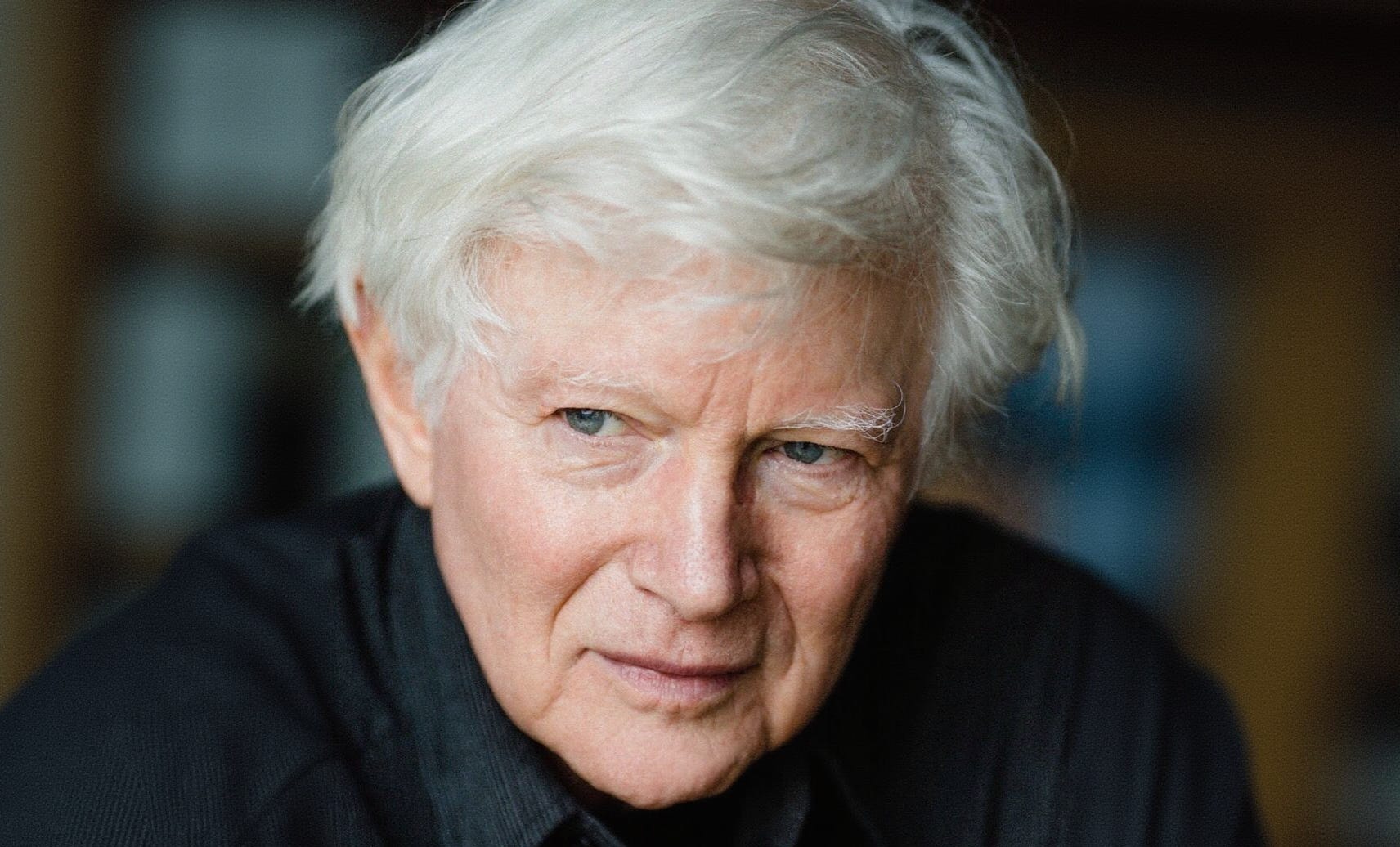
If, precisely to the extent that the field of education has championed lofty principles, a decline in education has set in, the question arises: Where did this come from? Psychologist Peter Gray, for whom the question of learning has become his life’s work (and who, for many years, wrote his widely read Freedom to Learn column in Psychology Today), recalls his school days in the 1950s, especially the great deal of freedom he had. No homework in Elementary School, no lugging materials back and forth between home and classroom—once you were outside, you were outside and free to play. And in our conversation, this seemingly trivial detail becomes the litmus test, revealing a fundamental shift: School is no longer a confined space but a totalizing system permeating every aspect of children’s lives.
Guided by his own son’s school experience, Peter Gray has spent decades researching how children learn when they are allowed to—in Hunter-Gatherer societies, where teaching is taboo, and at the Sudbury Valley School, where there are no curricula or grades, only radical autonomy. His thesis: Conventional schools have degenerated into disciplinary institutions that hit the most successful students the hardest. The rates of anxiety and depression do not merely reflect the parental pressure weighing on students; even more serious is how misguided ideals of perfection go hand in hand with the loss of free play—and thus the very sphere where creativity and critical thinking are fostered.
Peter Gray worked for many years as a research professor at Boston College. While his research initially focused on the brains and hormonal balance of mice, the issue of Education and Learning became a cause close to his heart. Author of a widely used introductory text on Psychology (now in its 8th edition), he’s also written numerous texts on how children learn. His Psychology Today column made him an influential voice for the Alliance of Self-Directed Education.
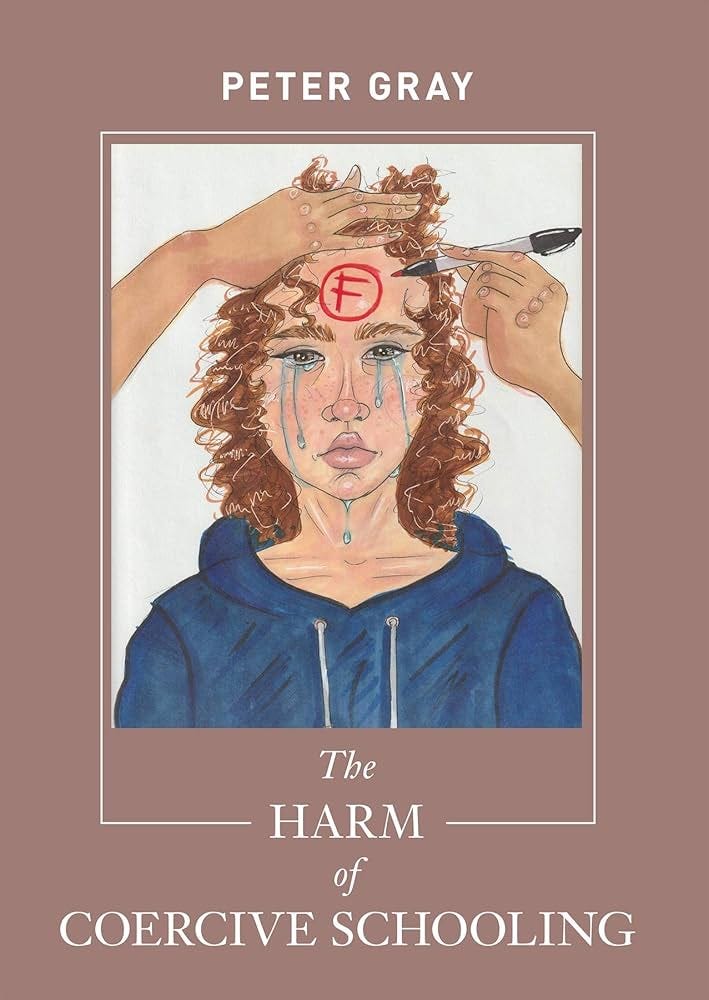
Peter Gray has published (selection)


Related Content
Talking to ... Rebecca Winthrop

That educational systems in nearly every industrialized country are facing a serious crisis in preparing students for the future is a common refrain we hear in our Ex nihilo conversations. When schools and universities issue certificates holding little more value than the paper they are printed on, when it’s difficult telling whether a h…
Talking to ... Cam Caldwell

It may be that the world around us is transforming into a vast puzzle, even a Mystery Play. This situation also extends to our professional environment, prompting organizational sociologists to observe a particularly unsettling phenomenon: the silent exodus of the workforce, characterized by a state of inner resignation where employees merely do the min…
Talking to ... Jeff Sutherland

Looking at many contemporary institutions, we can't help thinking Modernity's secret goal lies in its organizational irresponsibility. In the shadows, however, a revolution has occurred where the individual doesn’t have to function as a cog in the Wheelwork of a
Im Gespräch mit ... Bernhard Krötz

Es passiert nicht allzu häufig, dass jemand, der eigentlich in der höheren Mathematik zuhause ist (und sich dort mit reellen sphärischen Räumen, Liu-Gruppen und Fragen der Spektralanalyse beschäftigt), sich in die Niederungen unseres Bildungssystems hinein verirrt, mehr noch, dass er den Schulunterricht darauf befragt, ob er das, was zu leisten er vorgi…
Im Gespräch mit ... Konrad Paul Liessmann

Sich mit Konrad Paul Liessmann über Bildung zu unterhalten, heißt, dass man sich über die Theorie des Rennrads Gedanken machen muss – und darüber, ob die Philosophie als eine Form des geistigen Bodybuildings zu betrachten ist. Tatsächlich gibt es im deutschsprachigen Raum wohl keinen anderen Philosophen, der si…


